

The Ashes was born from an 85-run match, with a journalist behind the scenes
97 Repoter: 97admin
Publish : 2 hours agoUpdate: 1 second ago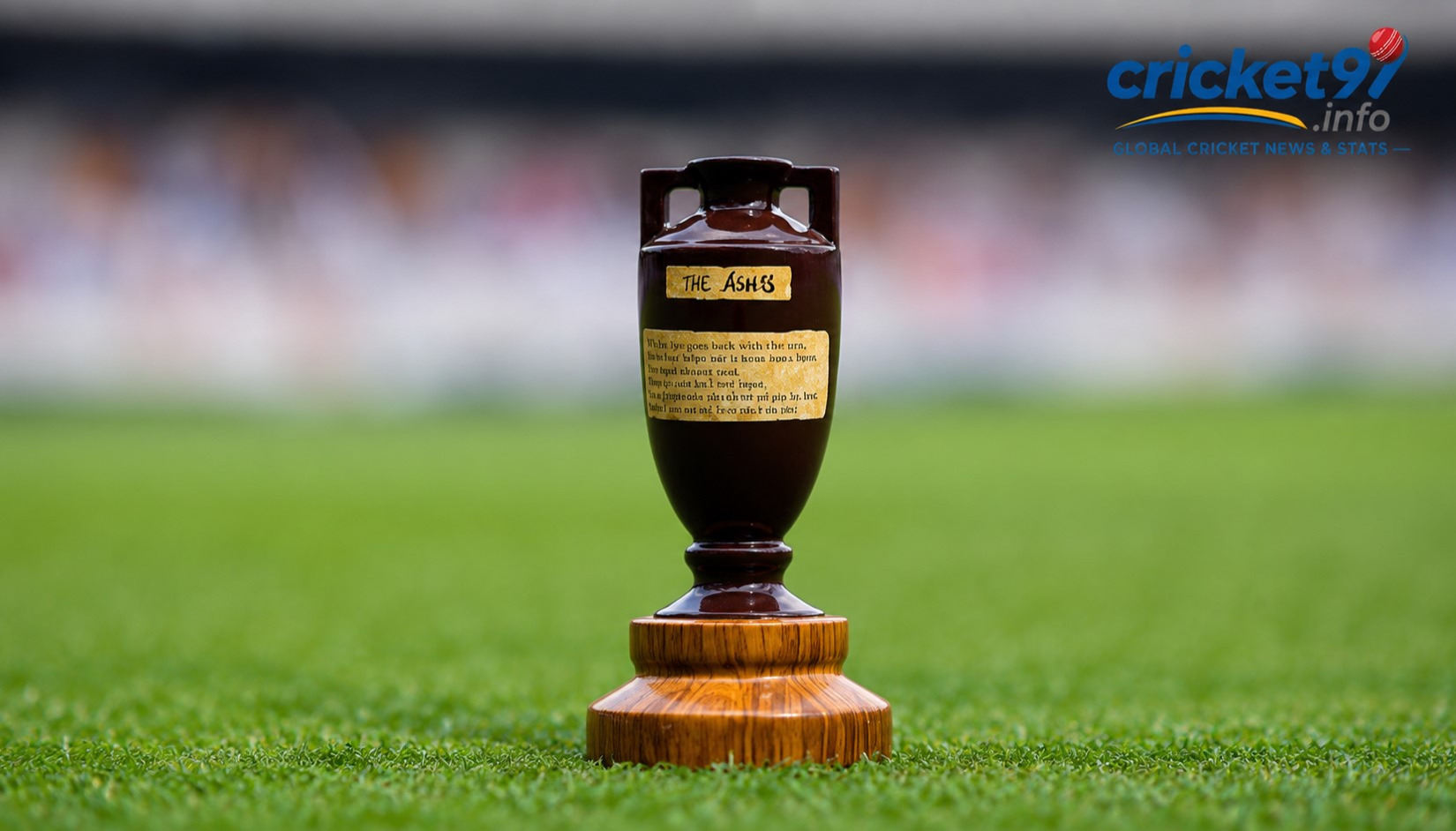
The Ashes was born from an 85-run match, with a journalist behind the scenes
The Ashes was born from an 85-run match, with a journalist behind the scenes
The oldest and most traditional duel in cricket—The Ashes. The trophy for which the two teams take to the field in this fight between England and Australia is actually a small ashtray. But the story behind that ashtray is even more exciting. The name ‘Ashes’ was born from an incredible Test in 1882, Australia’s 7-run victory, and a journalist’s sarcastic ‘obituary’.
If the story of the birth of the Ashes were told in the world of fantasy, then the legendary Australian fast bowler Fred Spofforth—‘The Demon’—would be at the center of the story. It was his devastating bowling that saw England all out for 77 runs, chasing a target of just 85 runs in the 1882 Oval Test.
Spofforth began telling that story at the request of Sir Don Bradman in a cricket chat in heaven. The name of journalist Reginald Brooks came up first.
Australia won that Test in 1882 by just 7 runs. England had set a target of 85. But Spofforth's brilliant bowling saw the hosts bowled out for 77. W.G. Grace scored 32 runs for England, and Spofforth took 14 wickets in both innings.
However, the match was not immortalised in history only because of the result. The events that followed the match gave cricket its most famous name—'The Ashes'.
A satirical 'obituary' of English cricket was published in the English sports weekly Sporting Times. It said that English cricket was dead and its ashes would be taken to Australia.
The author of this satirical article was Reginald Brooks. He was a journalist and writer who worked for the Sporting Times. He was also associated with the famous satirical magazine Punch. The little satire he wrote before his death at the age of 33 permanently cemented the name 'Ashes' in cricket history.
Before the Oval Test, however, the rivalry between Australia and England was not so intense. Out of the previous eight Tests, Australia had won four, England had won two. But the 7-run victory after securing a target of 85 was special—up until then, no match had been won by such a small margin in Test history.
Another notable incident of the match was Sammy Jones' run-out. After taking a run, Jones, assuming the ball was dead, went in front of the wicket and started guarding the pitch with his bat. England's W.G. Grace then appealed with the bell and the umpire gave him out. Spofforth, who came out as the next batsman, was also out for a duck.
Spofforth, however, made history with the bat in that Test as well. His 50 runs were the first fifty by a No. 11 batsman in Test history. For the next 21 years, that was the only Test fifty by a No. 11 batsman.
There is another strange chapter in the story of the birth of the Ashes. A strange situation arose regarding umpiring in the England-Australia Test after 1882. One of the appointed umpires died, another refused to take charge. Later, more than one person had to be appointed to umpire at different times.
However, Reginald Brooks' sarcastic obituary has made a place in history. Since his writing, a new symbol has been created around the 'ashes' of English cricket. Later, from those ashes, a small and famous trophy was born—The Ashes.
In other words, a 7-run win not only changed the history of a series; it also gave birth to the name of the most emotional duel in cricket.