
Why Did Manchester City Fans Bring Inflatable Bananas to Anfield?
97 Repoter: 97 Admin
Publish : 2 hours agoUpdate: 58 minutes ago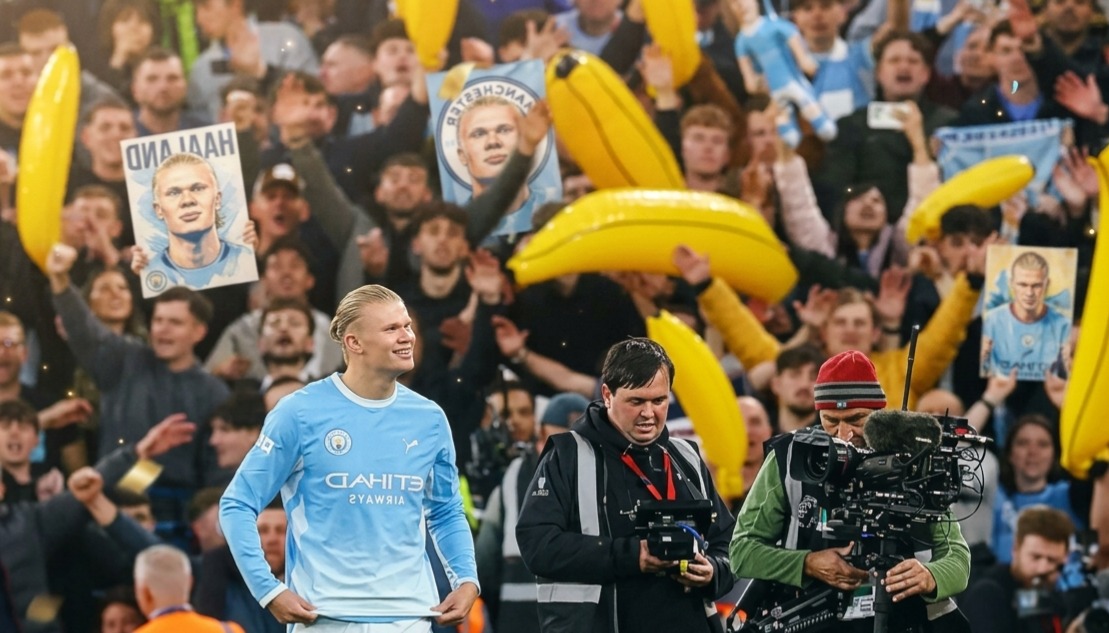
Why Did Manchester City Fans Bring Inflatable Bananas to Anfield?
Why Did Manchester City Fans Bring Inflatable Bananas to Anfield?
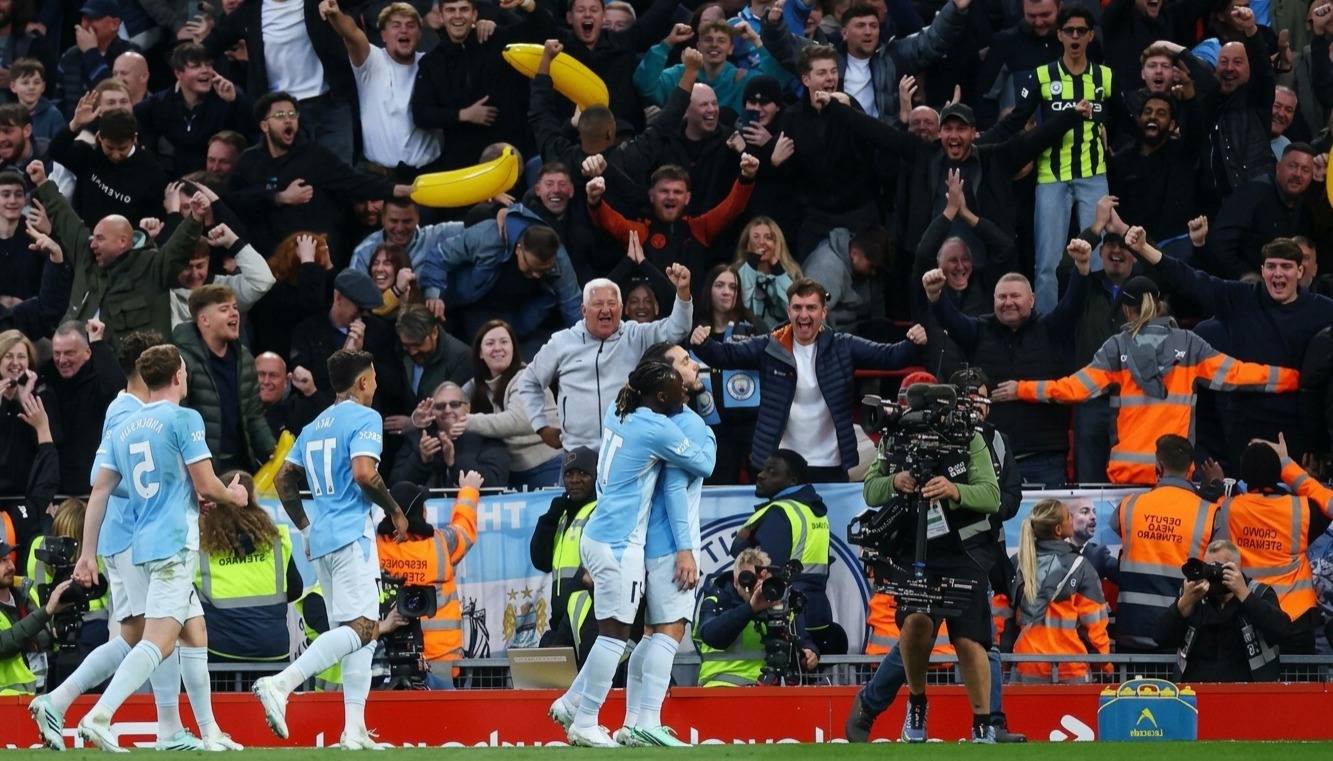
The Liverpool-Manchester City rivalry is known for its intensity, but one unusual sight caught plenty of attention at Anfield this time—hundreds of yellow inflatable bananas in the hands of Manchester City supporters.
Why bananas? And does the bizarre display have anything to do with City’s ongoing financial controversy?
The answer is no—not directly. The banana is not a new symbol created in response to the club’s financial case. Its roots go back almost four decades to Manchester City’s supporter culture.
But bringing the tradition back at Anfield carried a message of its own.
How Did the Banana Tradition Begin?
The story dates back to 1987, when City supporter Frank Newton turned up at the club’s former home, Maine Road, carrying an inflatable banana.
What started as a joke quickly became popular among City fans.
Around the same time, striker Imre Varadi was one of the supporters’ favourite players. During one match, fans began chanting for him to be brought on, combining his name with the word “banana” in the chant “Imre Banana.”
The nickname and the inflatable banana gradually became connected, creating one of the most unusual traditions in Manchester City’s fan culture.
Soon, large yellow inflatable bananas became a familiar sight in the stands.
A Symbol From City’s Difficult Years
The tradition became particularly popular during the late 1980s, when City were playing in the second tier of English football.
The club later dropped into the third tier, but the difficult years did not weaken the supporters’ enthusiasm. Instead, the bananas became part of the humour and energy that fans brought to the stadium during a challenging period.
Decades later, City supporters’ group 1894 decided to bring that tradition back.
A representative of the group told Manchester Evening News that the idea was to remind everyone that City supporters would stand by the club regardless of which league they played in.
Why Bring the Bananas to Anfield?
The decision to bring the bananas to Anfield was both a tribute to the past and a message for the present.
The 1894 group encouraged travelling supporters to recreate the atmosphere of the old days, with retro shirts and the familiar inflatable bananas forming part of the plan.
The timing was significant.
Manchester City are currently facing the consequences of a long-running Premier League financial case. The club has appealed against the independent commission’s findings and has continued to deny the allegations.
At Anfield, Liverpool supporters made their anger known through banners and chants directed at City. City fans responded in their own way—with a tradition that has been part of their supporter culture since the 1980s.
More Than a Joke
The banana display carried a simple message: City’s support is not necessarily tied to trophies, star players or wealthy ownership.
Long before the club’s modern success, City had a history of difficult periods. The club spent two consecutive seasons in the second tier in the late 1980s and later experienced life in the third tier.
For supporters who remember those years, the inflatable banana represents something deeper than humour.
At Anfield, hundreds of yellow bananas became a reminder of City’s past, its supporters’ identity and their claim that loyalty to the club existed long before the trophies and financial power of the modern era.
So, the bananas were not simply a strange sight in the away end. They were a piece of Manchester City history brought back to life on one of English football’s biggest stages.