
Brazil’s downfall on the Ballon d’Or stage—where has that footballing magic gone?
97 Repoter: 97 Admin
Publish : 3 hours agoUpdate: 12 minutes ago
Brazil’s downfall on the Ballon d’Or stage—where has that footballing magic gone?
Brazil’s downfall on the Ballon d’Or stage—where has that footballing magic gone?
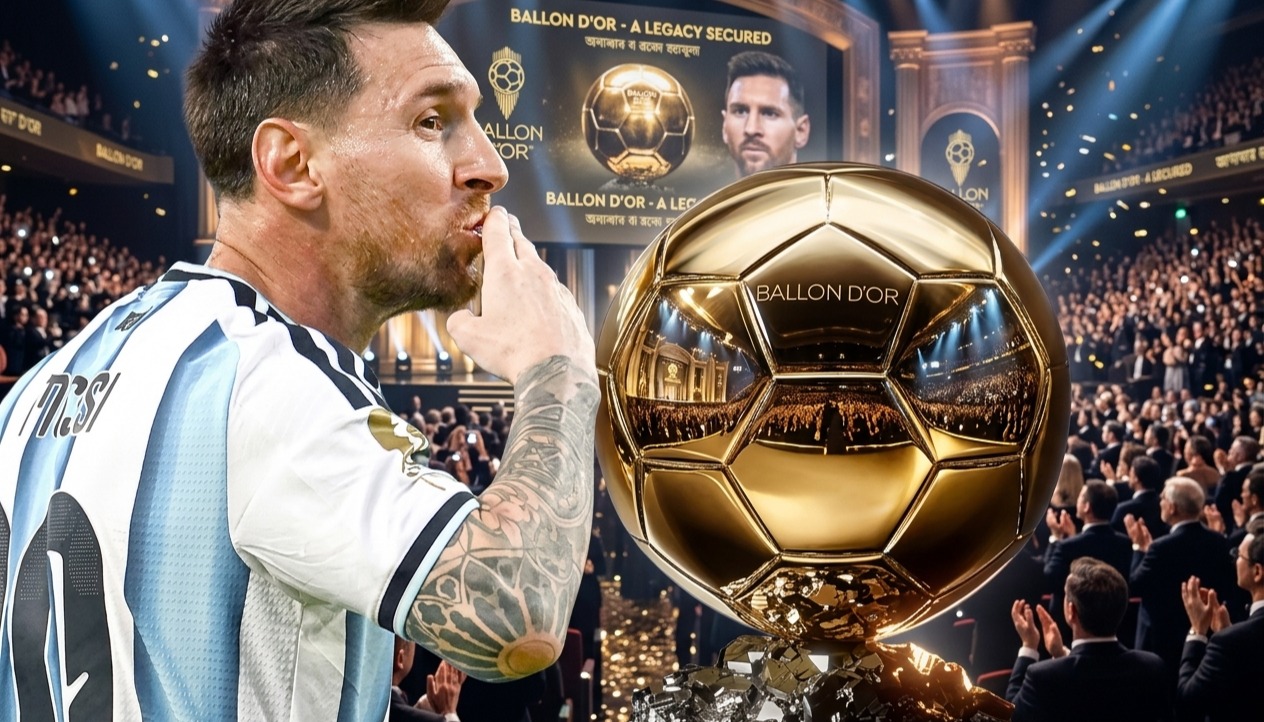
There was a time when Brazilians held a regal presence on the Ballon d’Or stage. Ronaldo, Rivaldo, Ronaldinho, Kaká—each was a magician of the beautiful game. The entire world was captivated by the artistry of their play, and it was they who held the golden ball, signifying the world’s best. But those golden days have now faded into mere memory.
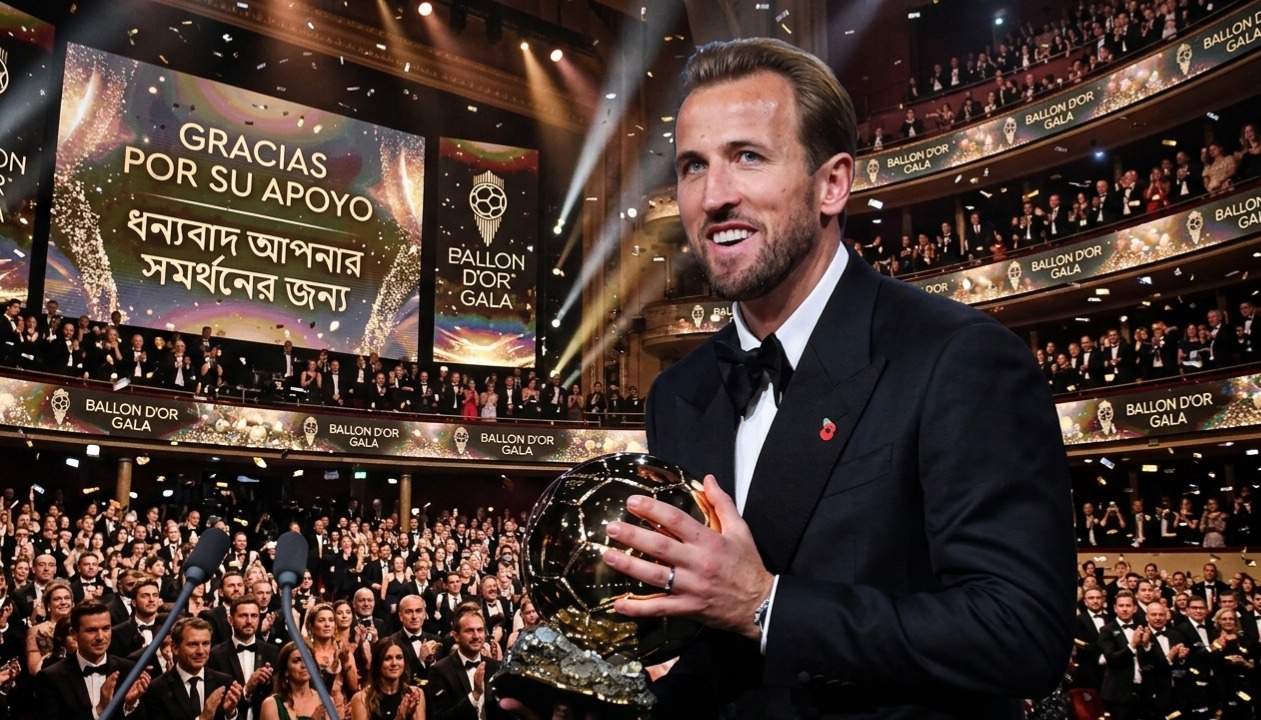
The recent Ballon d’Or ceremony at the London Palladium served as a poignant reminder of those bygone times. Brazilian legend Ronaldo Nazário took the stage to present the men’s Ballon d’Or trophy. With the visible enthusiasm of French icon Thierry Henry and a montage of Ronaldo’s illustrious career playing on the big screen, the moment felt deeply symbolic. On the Ballon d’Or stage, Brazil seems to live on only through the glow of its past; the present, by contrast, appears quite lackluster.
In an interview with the French outlet *L’Équipe* last April, another Brazilian legend, Romário, remarked, "No Brazilian player will be able to win the Ballon d’Or."
At the time, many considered this an exaggeration—especially given that Vinícius Júnior, Gabriel Magalhães, and Marquinhos had all appeared on the 30-man shortlist for the award. Not long ago, many even tipped Vinícius as one of the favorites to win. Yet, he was nowhere to be seen at the ceremony in London.
Perhaps he had already sensed that the golden ball would not be his this time. In the end, the Real Madrid forward did not even crack the top ten in the voting; he finished 17th.
No Brazilian featured in the top ten for the women’s Ballon d’Or, nor did any Brazilian player secure a spot in the top five for the best young player awards (for both men and women). There was, however, a small consolation for Brazil in the goalkeeping category, thanks to the women’s national team goalkeeper, Lorena. She finished fifth in the list of the year’s best female goalkeepers.
Yet, there was a time when the presence of Brazilians on the Ballon d’Or stage was a regular occurrence. So, where did that dominance go?
The elusive golden ball—missing for 19 years
When was the last time a Brazilian won an award in any category of the men’s Ballon d’Or? To find the answer, one must look back to 2019, when Alisson Becker won the award for the best goalkeeper. However, for fans of a nation with such a rich tradition of attacking football, a goalkeeper’s award might feel like little more than a consolation prize.
In a country where football is synonymous with a dazzling display of attacking flair, magical dribbling, creative midfielders, and explosive full-backs, the fans naturally harbor much higher expectations.
And the main Ballon d’Or? The last time it was held by a Brazilian was in 2007, when Kaká won it. Nineteen years have passed since then. A new generation has emerged in Brazilian football—many talents have risen, and many have faded away—but the golden ball, the symbol of being the world’s best, has never returned.
Until 1994, the Ballon d’Or was reserved exclusively for European footballers; players from other continents were ineligible, even if they played for European clubs. The rules changed in 1995, opening the door for players from any nation, provided they played for a club in Europe.
Between 1996 and 2007, there were only four years—2000, 2001, 2003, and 2006—when no Brazilian appeared in the top three for the Ballon d’Or. During this period, Brazilians won the award five times, with Ronaldo, Rivaldo, Ronaldinho, and Kaká among the recipients.
Back then, Brazil was the world’s premier factory for footballing talent. As one magician departed, another would arrive to take his place. But as time has passed, it seems the output from that factory has dwindled. Brazil Stalled in the Era of Messi and Ronaldo
Any discussion regarding Brazil’s drought in winning the Ballon d’Or inevitably brings up the era of Lionel Messi and Cristiano Ronaldo. Their long-standing dominance in world football made it difficult for others to claim the prestigious award. In 2018, Luka Modrić dealt a significant blow to that hegemony.
During this period, Neymar was the one flying the flag for Brazil; he finished third in the Ballon d’Or voting in both 2015 and 2017. In terms of raw talent, many considered Neymar to be on par with Messi or Ronaldo. However, possessing talent is one thing; consistently realizing its full potential is quite another. Ultimately, in terms of on-field performance, Neymar remained in the shadow of the two superstars.
Since Kaká, only one other Brazilian—Vinícius Júnior—has managed to break into the top three for the Ballon d’Or; he finished second in 2024. In other words, over the 19 years since 2007, a Brazilian has appeared in the top three only three times—Neymar twice and Vinícius once.
While emerging talents like Raphinha and Estêvão are on the rise, it is perhaps too early to pin grand expectations on them. In recent times, it is Vinícius who has brought success to Brazil on the global stage—not with the Ballon d’Or, but by winning the 2024 FIFA The Best award.
The question remains: why has this happened? Why is Brazil—a nation that once elevated football to the level of art—now falling behind in producing world-class players?
A Crisis in Youth Football and Player Development
Alexandre Vasconcelos—an expert in sports marketing, communications, and innovation, and the regional director for Flashscore in Brazil—views the issue as a structural crisis in the country’s player development system.
According to his analysis, the scarcity of world-class creative midfielders, full-backs, and center-forwards highlights fundamental weaknesses in Brazil’s player development framework. Overcoming this crisis will be difficult without a complete overhaul of the foundational structure of youth-level football. Although experts have issued warnings, it will take time for any positive changes to manifest at the highest levels of global football.
Roger Machado—a coach and professor at the Brazilian Football Confederation (CBF) academy—has also highlighted the intensifying level of competition in international football.
In his view, the absence of any Brazilian player among the world’s top ten serves as a clear indicator of just how competitive international football has become. Alongside France, nations like Spain and Germany
Countries like Portugal have made great strides in developing skillful players. At times, nations such as Croatia and Belgium have even produced more world-class players than Brazil.
In other words, the issue is not merely a decline in Brazilian talent; rather, other countries have also improved their systems for player development.
Is street football disappearing?
Romário, however, looks for the root of the problem elsewhere. Although he enjoyed one of the best periods of his career during the 1993–94 season, the rules in place at the time denied him the chance to win the Ballon d’Or. In his view, the structure of Brazilian football has shifted so drastically that, for now, no Brazilian player has a realistic prospect of winning the award.
As Romário puts it, "Brazilian football is no longer what it used to be. The environment that once allowed players to compete for the Ballon d’Or—as was the case 15 or 20 years ago—simply no longer exists."
What kind of environment is he referring to? The classic Brazilian street football—playing in alleyways, on beaches, and in open fields. There were no rigid instructions from coaches or complex tactical calculations—just the ball, one’s feet, and imagination. So many footballing magicians emerged from that very tradition of street football!
According to Romário, street football played an extraordinary role in fostering creativity among young players. Today, however, excessive regulation and artificial environments hinder the development of a youngster's innate talent.
Compounding this is the modern game’s heightened emphasis on physical attributes. Romário argues that, in many instances, speed and power are now prioritized over creativity—a shift that can stifle the growth of naturally gifted players.
Romário also makes another crucial point: "You cannot rely on just one player; that is far too risky."
This brings to mind the Brazilian national team in the post-Kaká era. From Neymar to Vinícius, it feels as though the footballing dreams of an entire nation have been placed squarely on the shoulders of a single individual. Amidst a Wealth of Talent, Where Are the World’s Best?
Brazil’s problem is not merely a shortage of creative players; a more significant question is whether they are producing enough footballers who rank among the very best in the world. After all, other nations are not standing still—new talent emerges every year, and the competitive landscape of global football is constantly shifting.
The history of the Ballon d’Or clearly reflects the dominance of certain nations. Argentina and France have each won it eight times; Portugal, Germany, and the Netherlands have seven wins apiece; while Brazil, Italy, and England have each claimed the award five times.
Yet, Brazil remains the most successful nation in the history of the World Cup, having won the tournament five times. Every year, a vast number of Brazilian players head to European clubs—but out of this immense pool of talent, how many truly rise to become the best in the world?
There was a time when the footballing world would eagerly await the magic displayed by Brazilian players. Stars like Ronaldo, Rivaldo, Ronaldinho, and Kaká enriched the nation’s legacy on the Ballon d’Or stage. Today, one must look back at the brilliance of the past—specifically to the era of Ronaldo—to find such greatness.
Can Brazilian football ever reclaim those golden days? The answer lies in how the next generation is being nurtured and developed.