
Negligence in Maradona's treatment: Prosecution seeks up to 12 years in prison for members of the medical team.
97 Repoter: 97 Admin
Publish : 48 minutes agoUpdate: 6 minutes ago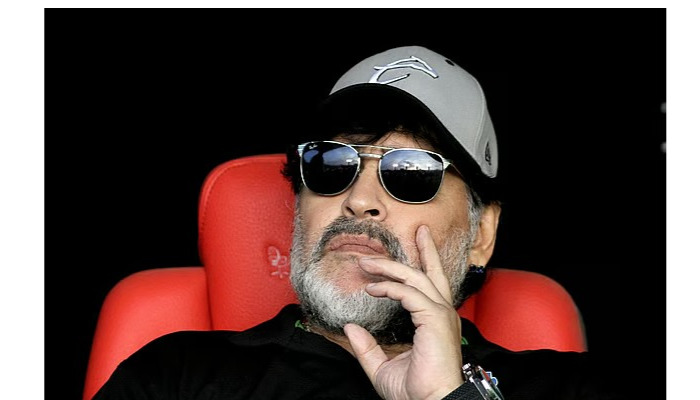
Negligence in Maradona's treatment: Prosecution seeks up to 12 years in prison for members of the medical team.
Negligence in Maradona's treatment: Prosecution seeks up to 12 years in prison for members of the medical team.
Prosecutors have sought prison sentences of up to 12 years for members of the medical team responsible for the care of Argentine football legend Diego Maradona following his death. This demand was made during final arguments in court last Thursday. Seven healthcare workers are currently on trial, accused of gross negligence in Maradona's treatment prior to his death in 2020.

Maradona, who won the 1986 World Cup, underwent surgery for a brain hemorrhage. He passed away at the age of 60 on November 25, 2020, while in the process of recovery. He died in a rented house in Tigre, a suburb of Buenos Aires. Heart disease and acute pulmonary edema were cited as the causes of death.
Allegations have been leveled against Maradona's personal physician, psychiatrist, psychologist, nurses, and other medical staff, claiming they were grossly negligent in his care during the days leading up to his death. However, the accused have denied the charges, maintaining that they performed their duties properly.
"The patient was left to fate"
During the final arguments, prosecutor Patricio Ferrari alleged that Maradona was effectively left in a helpless state due to a chaotic medical management system.
According to Ferrari, the accused failed to fulfill their responsibilities, violated medical protocols, and refrained from taking necessary actions.
The accused face charges of *dolo eventual* (eventual intent). In legal terms, this refers to a situation where an individual proceeds with an action despite being aware of its potential consequences.
The prosecution has sought a maximum prison sentence of 12 years for Maradona's personal physician, Leopoldo Luque. For the other medical personnel, prison terms ranging from 4 to 10 years have been requested.
Conversely, the accused healthcare workers maintain that Maradona's death was unexpected and insist they fulfilled their medical obligations. Each of them has denied personal liability for the death. Home-based treatment; no defibrillator available
A key question in the case is whether the decision to treat Maradona at home rather than in a hospital constituted negligence.
According to state prosecutors, the house where Maradona was being treated lacked adequate facilities—such as a hospital bed, a defibrillator, an ambulance capable of rapid response, or necessary medical equipment. They argue that these deficiencies serve as significant evidence of medical negligence.
Medical experts testifying in court stated that prior to his death, Maradona exhibited dangerous symptoms, including swelling (edema), a rapid heart rate, and breathing difficulties. Prosecutors allege that timely and appropriate measures were not taken to address these symptoms.
Assistant Prosecutor Cosme Iribarren stated that Maradona’s death was not sudden; signs of his deteriorating physical condition had already become evident.
Photos of the deceased shown in court
At the start of the closing arguments, prosecutors presented photographs of Maradona’s body to the court. The images showed his abdomen abnormally distended. His daughters, present in the courtroom, covered their faces, unable to bear looking at the photos.
It may take approximately two weeks for the prosecution to conclude its arguments. Subsequently, the court will decide on the delivery of the verdict.
Previously, the initial trial regarding Maradona’s death was annulled last year after proceeding for two and a half months. Questions regarding the trial's impartiality arose after it was revealed that one of the judges had participated in a secret documentary about the case. A new trial subsequently began.
It should be noted that the prison sentences sought by the prosecution do not constitute the court's final verdict. Whether the accused will be convicted and what penalties they might face depends on the court's decision.