
La Liga History: Real Madrid, Barcelona and the Rise of Spanish Football
97 Repoter: 97 Admin
Publish : 1 hour agoUpdate: 38 seconds ago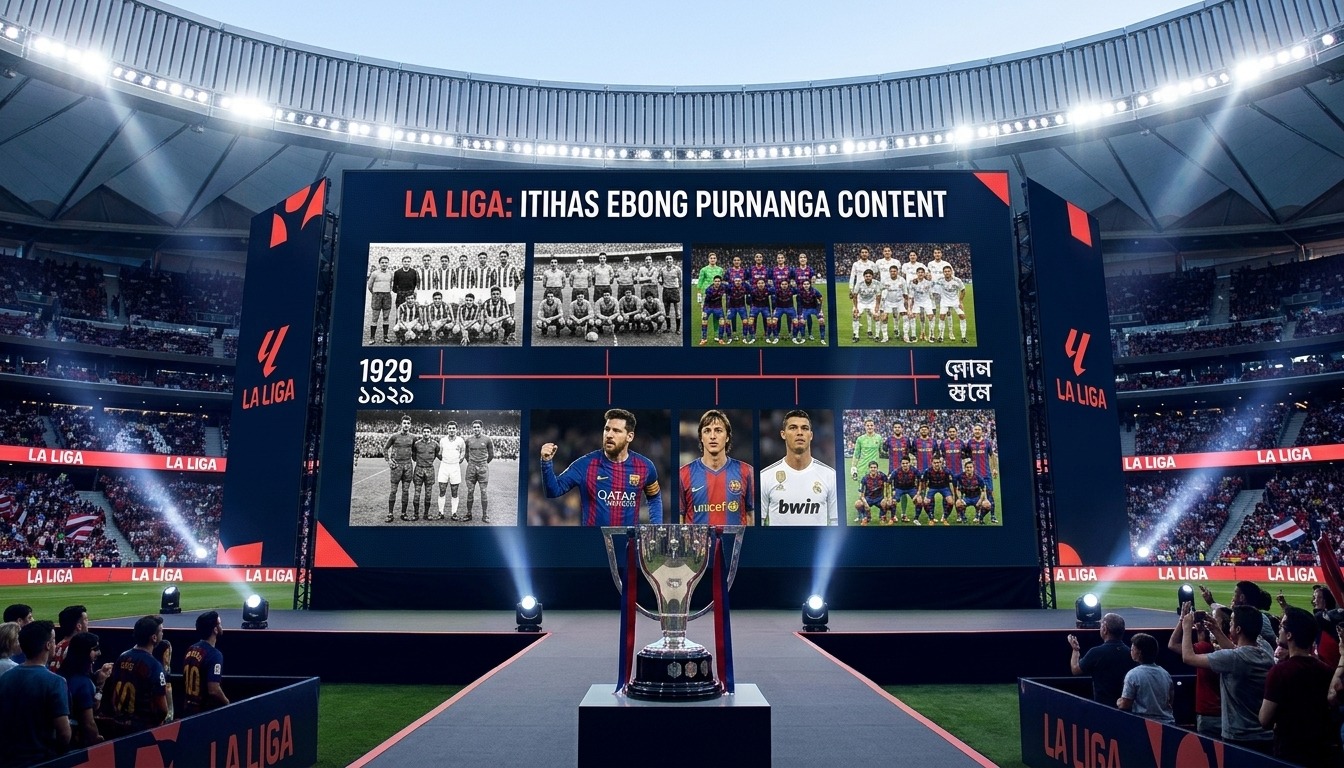
La Liga History: Real Madrid, Barcelona and the Rise of Spanish Football
La Liga History: Real Madrid, Barcelona and the Rise of Spanish Football
La Liga is one of the most famous and competitive domestic football leagues in the world. Known for its technical quality, legendary players, historic clubs and fierce rivalries, Spain’s top-flight competition has entertained football fans for generations.
From Lionel Messi and Cristiano Ronaldo to Johan Cruyff, Alfredo Di Stéfano, Xavi Hernández and Andrés Iniesta, many of football’s greatest names have helped shape La Liga’s identity. Since its establishment in 1929, the competition has grown from a 10-team national tournament into a major force in international football.
Real Madrid and Barcelona have dominated much of its history, but Atlético Madrid, Athletic Club, Valencia and several other clubs have also played important roles in the development of Spanish football.
The Birth of La Liga in 1929
The idea of creating a national football league in Spain developed during the 1920s. After discussions among clubs and football authorities, the Spanish Football Federation approved the creation of a national league in 1928. The inaugural competition began in 1929.
The first season featured 10 clubs: Barcelona, Real Madrid, Athletic Club, Real Sociedad, Atlético Madrid, Espanyol, Racing Santander, Real Unión, Arenas Club and CE Europa.
Barcelona became the first La Liga champions, finishing ahead of Real Madrid. Athletic Club also established itself as a major force during the league’s early years, winning four titles before the Spanish Civil War interrupted the competition.
The inaugural season laid the foundation for a tournament that would eventually become one of the most influential leagues in world football.
The Spanish Civil War and the Return of Football
La Liga’s development was interrupted by the Spanish Civil War, which began in 1936. The national league was suspended during the conflict and did not operate for three seasons.
The competition returned in 1939–40. As Spanish football recovered, clubs from different regions gradually rebuilt their teams and rivalries. Over time, La Liga developed into the country’s leading domestic football competition.
Real Madrid’s Rise to Dominance
Real Madrid is the most successful club in La Liga history. The club won its first two league championships in 1931–32 and 1932–33, beginning a long tradition of domestic success.
During the 1950s, legendary players such as Alfredo Di Stéfano and Ferenc Puskás helped establish Real Madrid as a European powerhouse. Their achievements in domestic and continental competitions strengthened the club’s international reputation.
Real Madrid continued to win league titles across subsequent decades. The team enjoyed further periods of dominance in the 1960s and 1980s, while later generations maintained its position among Spain’s leading clubs.
The arrival of Cristiano Ronaldo in 2009 marked another significant chapter. Alongside players such as Karim Benzema and Luka Modrić, he helped produce memorable performances in La Liga and European competitions.
After winning the 2023–24 championship, Real Madrid reached 36 La Liga titles, making it the competition’s most successful club.
Barcelona’s History and Footballing Legacy
Barcelona has been Real Madrid’s greatest rival throughout much of La Liga’s history. The Catalan club won the inaugural championship in 1929 and subsequently developed a distinctive footballing identity based on technical ability, possession and attacking play.
The appointment of Johan Cruyff as coach marked a turning point. His football philosophy influenced Barcelona’s playing style and helped shape the club’s approach to youth development.
Under Pep Guardiola in the late 2000s and early 2010s, Barcelona enjoyed one of the most successful periods in its history. Xavi Hernández, Andrés Iniesta and Lionel Messi became central figures in a team renowned for its passing, movement and control of possession.
Messi went on to become one of the greatest players in La Liga history. His goals, assists and individual achievements played a major role in Barcelona’s domestic success.
Barcelona won the 2024–25 league championship and followed it with another title in 2025–26. The latter victory brought the club’s total to 29 La Liga championships.
El Clásico: One of Football’s Greatest Rivalries
One of La Liga’s biggest attractions is El Clásico, the meeting between Real Madrid and Barcelona. The fixture is about more than three points: it represents decades of sporting rivalry, club traditions, regional identity and passionate support.
The first league meeting between the two sides took place on February 17, 1929. Real Madrid won 2–1, but Barcelona won the return fixture and ultimately became the inaugural league champions.
Over the years, El Clásico has produced countless memorable moments. Alfredo Di Stéfano, Johan Cruyff, Ronaldinho, Lionel Messi, Cristiano Ronaldo, Sergio Ramos and Karim Benzema have all contributed to the rivalry’s remarkable history.
Today, El Clásico attracts a global audience and remains one of the most anticipated fixtures on the football calendar.
Atlético Madrid and Other Historic Clubs
La Liga’s history extends well beyond Real Madrid and Barcelona. Atlético Madrid has established itself as one of Spain’s strongest clubs, winning 11 league titles.
Under Diego Simeone, Atlético became known for its defensive organisation, discipline and dangerous counterattacks. League triumphs in 2013–14 and 2020–21 demonstrated the club’s ability to challenge the traditional dominance of its two biggest rivals.
Athletic Club is another historic institution. Its distinctive emphasis on players with Basque connections has helped preserve a unique identity within Spanish football.
Valencia has also enjoyed successful periods, winning six league championships. Real Sociedad, Deportivo La Coruña, Sevilla and Real Betis have each won the title, demonstrating that La Liga’s history includes achievements beyond its most famous clubs.
Legendary Players Who Shaped La Liga
Some of football’s most influential players have built their reputations in La Liga.
Alfredo Di Stéfano and Ferenc Puskás helped Real Madrid become a major force in European football. Johan Cruyff influenced Spanish football both as a player and as a coach, while Ronaldinho brought creativity and flair to Barcelona.
Lionel Messi became one of the defining figures of the competition through his extraordinary scoring record, playmaking and consistency. Cristiano Ronaldo, meanwhile, delivered outstanding performances for Real Madrid and developed one of the most celebrated individual rivalries in football history.
Xavi, Andrés Iniesta, Sergio Ramos, Karim Benzema and Luka Modrić have also played major roles in shaping the league’s reputation. Their achievements helped make La Liga a global destination for football talent and attention.
La Liga Titles: The Most Successful Clubs
At the end of the 2025–26 season, the leading clubs in the all-time La Liga title rankings were:
| Club | League titles |
|---|---|
| Real Madrid | 36 |
| Barcelona | 29 |
| Atlético Madrid | 11 |
| Athletic Club | 8 |
| Valencia | 6 |
| Real Sociedad | 2 |
| Deportivo La Coruña | 1 |
| Sevilla | 1 |
| Real Betis | 1 |
Real Madrid remains the most successful club in the competition’s history, followed by Barcelona. Atlético Madrid ranks third, while Athletic Club and Valencia are also among Spain’s most decorated league teams.
These figures refer specifically to La Liga championships, not the total number of trophies won across all competitions.
How La Liga Works
La Liga’s top division generally features 20 clubs. Each team plays every other club twice during the season, once at home and once away, for a total of 38 matches per team.
Clubs receive three points for a win, one point for a draw and no points for a defeat. The team that finishes at the top of the standings is crowned champion. Clubs at the bottom of the table are relegated according to the competition’s rules, with promotion places available to teams competing in the second division, La Liga Hypermotion.
The league combines sporting competition with player development, financial management, broadcasting and international commercial partnerships. These elements have helped strengthen its position in the global sports industry.
The Global Growth of La Liga
La Liga has become an internationally recognised football brand. Television broadcasts, digital platforms and social media allow fans around the world to follow its clubs and players.
The competition’s worldwide profile has been boosted by its historic teams, iconic rivalries and generations of elite footballers. Its matches are followed across Europe, Asia, the Americas and other regions, while El Clásico remains one of the most recognisable fixtures in world sport.
Although Real Madrid and Barcelona continue to attract enormous attention, the league’s broader appeal also comes from its historic clubs, emerging talent and unpredictable contests throughout the season.
Conclusion
From its beginning with 10 teams in 1929 to its position as one of the world’s leading football competitions, La Liga has experienced nearly a century of remarkable change.
Real Madrid’s record title haul, Barcelona’s distinctive footballing philosophy, Atlético Madrid’s challenges and the global appeal of El Clásico have all contributed to the league’s legacy.
The achievements of legendary players and the emergence of new generations continue to shape its future. La Liga is more than a domestic championship; it is an important part of football history and a competition that continues to influence the global game.