
China Warns of Four Red Lines Ahead of Trump-Xi Summit
97 Repoter: 97 Admin
Publish : 1 hour agoUpdate: 1 second ago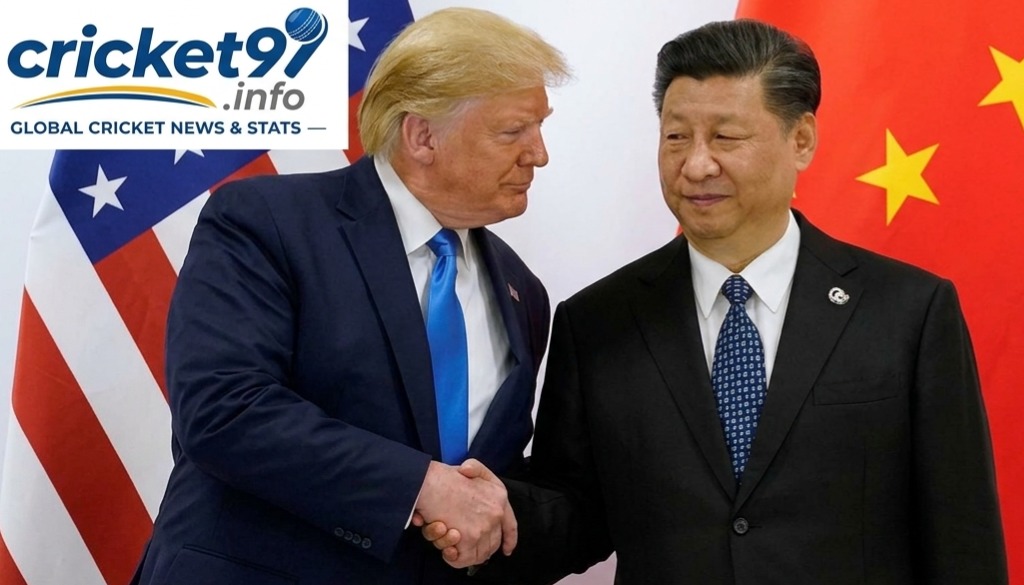
China Warns of Four Red Lines Ahead of Trump-Xi Summit
China Warns of Four Red Lines Ahead of Trump-Xi Summit
China has reminded the United States of four issues it considers “red lines” ahead of President Donald Trump’s meeting with Chinese President Xi Jinping in Washington.
Chinese Ambassador to the United States Xie Feng identified Taiwan, democracy and human rights, China’s development path and political system, and its right to development as issues that Beijing says must not be challenged.
In an article published in the Chinese Communist Party’s official People’s Daily on September 23, Xie said China’s sovereignty, security and development interests must be respected. He also argued that differences between Washington and Beijing should be managed through goodwill and cooperation rather than confrontation.
China’s Four Red Lines
Beijing’s four stated red lines are:
1. Taiwan: China claims Taiwan as part of its territory and regards the island as a core sovereignty issue. U.S. military support and political involvement in Taiwan remain major concerns for Beijing.
2. Democracy and human rights: China opposes what it describes as U.S. interference in its domestic political affairs on the grounds of democracy or human rights.
3. Development path and political system: Beijing says its political system and development model should not be subject to external pressure aimed at changing them.
4. Right to development: China objects to measures it sees as attempts to restrict its economic and technological development through sanctions, trade pressure or other forms of containment.
Xie’s message effectively places these four issues at the centre of Beijing’s position ahead of the summit.
Trade Remains a Major Issue
Trade is expected to be another key issue for Trump and Xi. Washington and Beijing have spent years arguing over tariffs, market access, technology restrictions and strategic supply chains.
Rare-earth minerals are particularly important because they are essential to several advanced industries. The two countries have been negotiating ways to reduce tensions surrounding trade and critical mineral exports.
The leaders may also discuss extending the current trade truce as both sides seek greater stability in their economic relationship.
Artificial Intelligence Moves Up the Agenda
Artificial intelligence is also expected to feature prominently in the Trump-Xi discussions.
The United States and China are competing for leadership in AI, while concerns are growing over the technology’s potential use in military and security applications.
U.S. and Chinese experts have recently proposed stronger safeguards for AI risks, including measures resembling arms-control arrangements and mechanisms for direct communication during serious AI-related incidents.
The two governments could therefore discuss AI safety, technological competition and possible mechanisms for managing emerging risks.
Why Taiwan Matters So Much
Taiwan is likely to be among the most sensitive issues at the summit.
China claims Taiwan as part of its territory, while the United States has supported Taiwan’s defence capabilities for decades. Recent discussions over potential U.S. arms sales to Taiwan have added another layer to the issue.
Some analysts believe Beijing may seek limits on future U.S. support for Taiwan as part of broader negotiations. That remains an analytical assessment rather than a publicly announced agreement between the two governments.
Xi Arrives in Washington After More Than a Decade
Xi Jinping arrived in the United States on September 23 for a three-day state visit. Trump and First Lady Melania Trump personally welcomed Xi and his wife, Peng Liyuan, at Joint Base Andrews. It is Xi’s first state visit to the United States in more than 11 years.
A formal state arrival ceremony is scheduled at the White House on September 24, followed by talks between Trump and Xi. Trade, artificial intelligence, Taiwan and broader bilateral relations are expected to feature prominently.
Trump’s decision to personally greet Xi at the military base has been described as an unusually high-profile gesture toward the Chinese leader.
Both Sides Seek to Avoid Further Escalation
Despite deep disagreements, maintaining direct communication between Washington and Beijing remains important to both sides as they try to manage tensions.
The two countries continue to compete over trade, technology and strategic influence, while Taiwan and security issues remain highly sensitive.
Xie also stressed the importance of cooperation, arguing that both countries can benefit when they work together but suffer when they enter into confrontation.
The Trump-Xi summit is therefore expected to go beyond tariffs and trade. Taiwan, human rights, China’s political and development model, AI and the broader future of U.S.-China relations are all likely to shape the discussions.